

Start Politics From Grassroots, Stop Focusing on Abuja, Soludo Tells Nigerians
Laments that public service now opportunity to eat

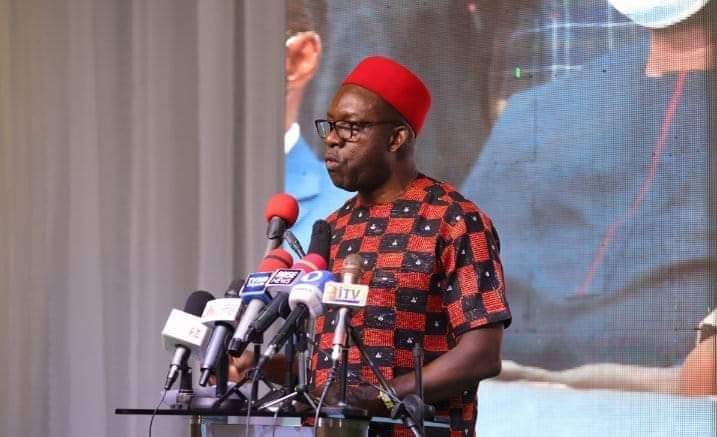
Former Governor of the Central Bank of Nigeria (CBN) and Anambra State Governor-elect, Prof. Chukwuma Soludo, has told Nigerians to stop complaining about the system and participate in politics at the grassroots, rather than their fascination for Abuja.
The politician, who believed that local politics may offer a more viable route for national development, said “For Nigerians, most people focus on politics in Abuja, and we have for too long tried in vain to fix Nigeria from the up.”
He was speaking on the theme, “Emergence of the Unconventionals” at the graduation ceremony of the pioneer class of the School of Politics, Policy and Governance (SPPG), founded by former Minister of Education, Dr. Oby Ezekwesili.
“The key is to participate in the process or stop complaining”, he stated, adding that “for Nigerians, most people focus on politics in Abuja, and we have for too long tried in vain to fix Nigeria from the up. It is time to try fixing it and its politics from below, from the sub national units, the local governments, the villages, the clans. If you have something to offer, go and run for office. Win or lose, your participation will add something to the process. Then persevere, endure, and remain focused on delivering your purpose.”

He lamented that “much of the existing social order is founded on competition for, and distribution of rents, oil and the easy money that came with it destroyed the social fabric and the elite created new institutions and political structures to maximise their gains.
“As the noose tightened globally on other rentier/criminal enterprises such as drug trafficking or internet scamming, many of the barons flocked into politics as the next easy alternative.
“Politics has become big business. Appointment or election into public office is seen largely as an opportunity to “eat rather than a call to selfless service.”
Soludo called for a new liberation movement in Nigeria and, by extension, Africa, which according to him would promote selfless service of political leaders.
Stressing mass participation in politics, the economist state, “Dear friends, fixing politics requires talent and skills. But these won’t be enough. It won’t happen by lone wolves working in silos. It requires new developmental organisations – organisations/teams of believers, driven by defined ideology, purpose and character.
“Let’s be clear about one point: Nigeria does not lack well educated/skilled and widely travelled stock of human capital to drive her development. In the US alone, Nigeria ranks highest on education among ethnic minorities and as a percentage of its population, it has the most educated population of all ethnic groups. At home, we have over 100 universities churning out hundreds of graduates every year.
“All over the world, Nigerians excel as champions in their various fields. A key missing link is purpose-driven cohesion and organisation for transformation of the homeland. There are many disparate groups and organisations, including political parties which claim (at least on their statutes) to champion national development.
“Only a few, if any, can be identified by any soul in terms of a nationalist ideology, professed and practiced by its members. The liberation struggle for independent Africa was driven by a nationalist ideology to be anchored by a developmental state. There is a huge void today, and I am not sure how we can fix our politics without the requisite organisations for change.
“So, my first charge to my new friends and graduates is to profess their purpose in the political farmland and actively participate to actualise it. If you have not yet done so, when you go home today, write down your purpose (what do you want to achieve) in the public arena and paste same beside your reading table or anywhere for everyday reference.
“Then, join a political party, a civil society organisation, or organise alternative better platforms of leverage. You may better disrupt from inside than outside. Organisation is power. The key is to participate in the process or stop complaining.
