


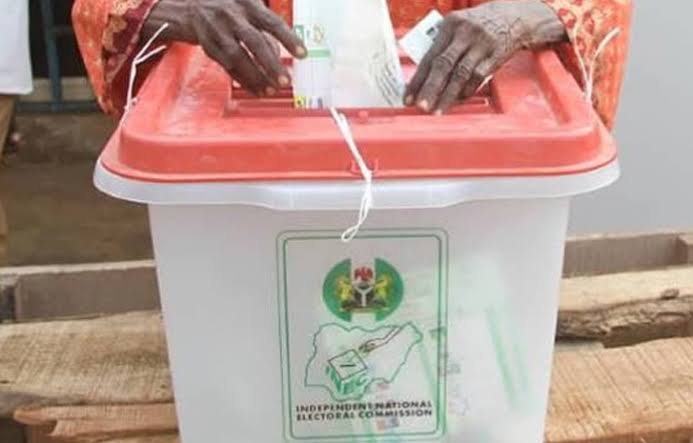
Participants at the 8th Annual Anniversary Lecture of Penpushing Media have called for far-reaching electoral reforms, stronger democratic institutions and greater accountability in governance.
They insist that restoring public confidence in Nigeria’s electoral process is critical to achieving good governance and sustainable national development.
This was stated in a communiqué issued at the end of the anniversary lecture held at the Olusegun Obasanjo Presidential Library (OOPL), Abeokuta, Ogun State.
The lecture, themed “Restoring Electoral Integrity: The Path to Good Governance and Public Accountability,” brought together an array of eminent personalities, including traditional rulers, jurists, Senior Advocates of Nigeria (SANs), public officials, media professionals, academics, civil society organisations and other stakeholders to deliberate on the future of Nigeria’s democracy.
The communiqué noted that credible elections remain the cornerstone of legitimate government, political stability and sustainable development, warning that declining public confidence in the electoral process, as reflected in voter apathy and low participation, poses a serious threat to democratic consolidation.
Participants therefore urged Nigerians not to lose faith in democracy but to actively participate in strengthening electoral institutions through civic engagement, voter education and responsible citizenship.
The gathering identified weak internal democracy within political parties, imposition of candidates, excessive monetisation of party nominations, vote-buying and persistent violations of electoral laws as some of the major impediments to credible elections.
It stressed that electoral integrity must begin with transparent and democratic party primaries where candidates emerge through genuine participation rather than manipulation, financial influence or exclusion.
On the judiciary, participants reaffirmed that an independent and impartial justice system remains indispensable to democratic stability and constitutional governance.
They urged politicians to desist from attempts to compromise judicial officers, while calling on legal practitioners to uphold the highest ethical standards in order to preserve the integrity, dignity and independence of the judiciary.
According to the communiqué, public confidence in democracy is inseparable from public trust in the justice system.
The stakeholders also expressed concern over the rising level of poverty, unemployment and inadequate access to basic social services, noting that democracy cannot achieve its true purpose where citizens continue to face severe socio-economic hardship.
Drawing inspiration from the free education policy introduced by the late Chief Obafemi Awolowo, the participants called on governments at all levels to renew investment in education, healthcare, agriculture, employment generation, social protection and economic empowerment; they also urged the full implementation of existing social welfare programmes aimed at improving the living conditions of vulnerable Nigerians.
Recognising the media as a critical pillar of democracy, the communiqué challenged journalists and communication professionals to uphold the principles of accuracy, fairness and responsibility by providing factual information and properly scrutinising political office seekers.
It advised the media to focus on candidates’ competence, integrity, experience and policy direction rather than personality-driven campaigns, warning that political communication should never become a vehicle for misinformation or manipulation.
The participants equally stressed the importance of civic education in nurturing an informed electorate and called for stronger civic and history education in schools, while encouraging professionals and members of the middle class to become more actively involved in governance and electoral processes.
On transparency and accountability, the stakeholders advocated closer monitoring of government budgets, public expenditure and development projects. They also endorsed stronger anti-corruption measures, the recovery of stolen public assets and the deployment of recovered funds to education, healthcare and other critical sectors.
The communiqué further called for reforms that would strengthen transparency in the asset declaration process for public office holders.
Expressing concern over growing insecurity, unlawful killings and violations of citizens’ fundamental rights, the participants urged government to intensify efforts to safeguard lives and property, secure educational institutions, rescue victims of criminal activities and ensure justice for victims of human rights abuses.
They also called for greater inclusion of persons with disabilities through the effective implementation of laws protecting their rights.
The gathering maintained that the ultimate objective of electoral reforms should be the emergence of competent, transparent and accountable leaders committed to improving the welfare of Nigerians.
It therefore advocated continuous review of electoral laws, stronger democratic institutions and prompt resolution of election-related disputes as essential measures for restoring public confidence in the nation’s electoral system.
The participants concluded by reaffirming that restoring electoral integrity is a collective responsibility requiring the commitment of political leaders, citizens, the judiciary, the media, civil society organisations and other stakeholders.
They pledged to continue promoting democratic values, accountability and responsible citizenship towards building a Nigeria where elections truly reflect the will of the people and governance delivers tangible benefits to all citizens.
